
- Download Issue 65 (US Letter, 7,8 mb) Buy as Book on Demand here (US) and here (DE)

6 – Kraljevica
Croatia
Frankopan Castle
Inauguration: April 23, 2025
Additional Informations about Kraljevica


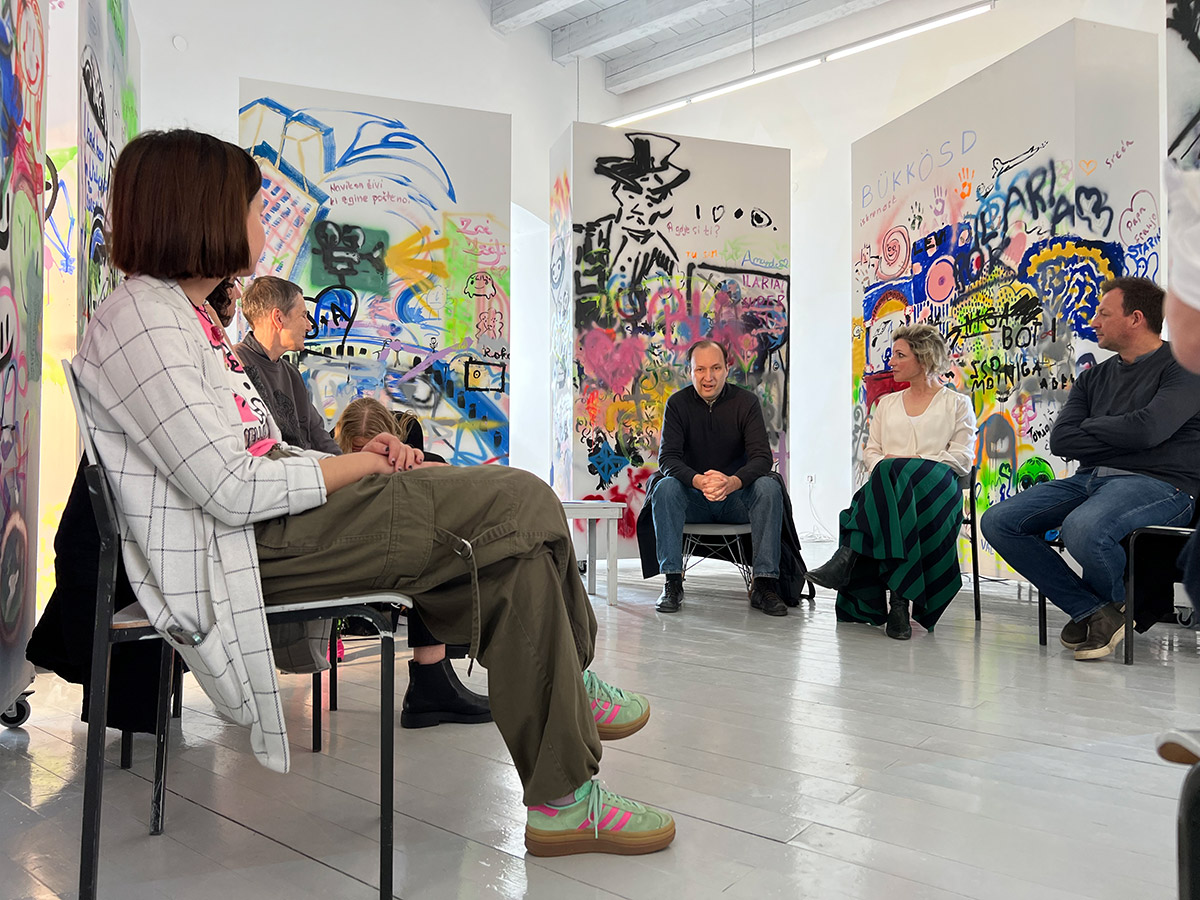
Panel discussion “The Participatory Art as a Commoning Space”, April 23, 2025, with Branka Benčić, Sanja Bojanić, Igor Eškinja, Lina Franko, and Zoran Erić
Panel discussion: The Participatory Art as a Commoning Space
The Frankopan Castle, located in the small port township of Kraljevica, has emerged as a significant cultural and artistic hub, fostering international collaborations and art exchanges. Its cutting-edge art programs explore themes of cultural diversity and the transdisciplinary collaborative production of art events, as exemplified by the 3RD-SPC./RP project.
The question of who constitutes the public in these projects remains a subject of ongoing debate. Is it solely the art world, or does the broader local community relate to these initiatives? What is their role and impact, if any? This panel will therefore focus on the potential of participatory art practices in fostering community engagement through collaborative processes. The project proposal if walls could tell, aims to initiate the co-creation of artwork by the citizens themselves, with the artist providing only blank white walls, placed in public space, to invite their expression.
The project intends to test the assumption that such collective creative processes empower participants, transforming them from passive consumers of art into active co-authors of shared experiences. The central theoretical framework of this discussion will be the concept of commoning space. In this context, the term commoning carries a more nuanced discursive meaning than the traditional theory of the commons. It offers the potential for creating shared spaces in which participation in the creative process can establish new social relations among diverse local groups, thereby "repairing" the broken bonds of what Jean-Luc Nancy has termed the "inoperative community."
– by Zoran Erić
Additional Informations about Kraljevica:
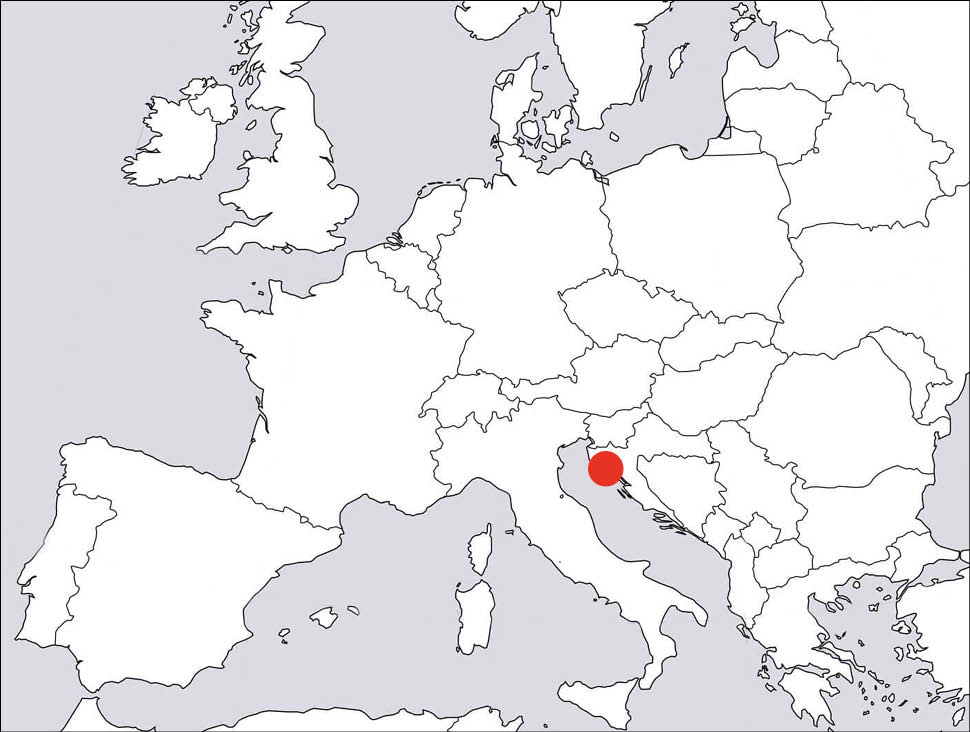
© www.freeworldmaps.net
Kraljevica is a small coastal town in the Primorje-Gorski Kotar County of Croatia, situated on the Kvarner Bay between the mainland and the island of Krk. Its history as a port and fishing community stretches back to the medieval period, and from the twelfth to the seventeenth century it was part of the territory controlled by the Croatian noble families Frankopan and Zrinski, who built two castles in the town, both of which survive. The Frankopan family in particular left an extensive heritage of castles and sacred buildings across the Kvarner region. After the execution of the last Frankopan and Zrinski leaders in Vienna in 1671 for conspiracy against Habsburg rule, the town continued as a maritime community, and its historic shipyard is among the oldest on the Adriatic. In the twentieth century Kraljevica, like much of coastal Croatia, developed a tourism economy alongside its traditional fishing and maritime industries.
In recent years, the restored Frankopan Castle has become the first station on the cultural route "The Routes of the Frankopans" and has also emerged as a venue for contemporary art programming and international collaboration through the 3RD-SPC./RP project. The 3RD-SPC./RP project raises questions that are central to this catalogue's broader concerns: who constitutes the public for artistic projects in a small community with a specific local identity, and how does participatory art engage residents beyond the networks of the art world? The project *if walls could tell* proposes to address this directly by offering blank white walls in public space as a surface for collective citizen expression, using the concept of commoning space to explore whether participatory creative processes can establish new social relations and repair community bonds in a context shaped by seasonal tourism, postindustrial transition, and a deep but not always visible historical heritage.
– by Vero Róza Risnovska