
- Download Issue 64 (US Letter, 8,6 mb) Buy as Book on Demand here (US) and here (DE)

by Wang Yini and Wu Ziwei
Agent and Agency: Exhibiting Art Systems with Creativity in the Generative AI Age
The terms “Agent” and “Agency” are frequently used in discussions about Generative AI (Gen AI). Both come from the Latin agens, meaning “to do.” They are also notably ambiguous. In AI, “Agent” sometimes refers to a system that processes information and acts to achieve goals, and sometimes to an acting entity. “Agency” in everyday use means an institution or a representative, while it also refers to activeness or capacity to act in the humanities. These cognate terms shift meaning between subject, intermediary, and tool depending on context. Sometimes their meanings conflict, and sometimes they support each other, creating a dramatic ethical tension.
Discussions of agency in the Gen AI era focus on artificial agency and the new status of human users within AI systems. The concept of “distributed agency”[1] from actor-network theory argues that agency does not belong to a single subject. Instead, it is dynamically distributed across diverse networks. In human-AI systems, humans possess social and individual agency, while AI forms an emergent collective agency - a form of “social artificial agency.[2] Natural, animal, and artificial entities also have their own agency. When these agencies interact within a system, they collide, creating the core issue of agency in artistic creation under Gen AI.
In artistic creation, the artists agency affects the revaluation of artistic merit. In the Gen AI era, AI participates in creation, and some artworks emerge from database-driven processes. Humans act as temporary data repositories, losing part of the agency derived from embodied perception.
In terms of art viewing, Gen AI lowers the intellectual threshold for art. Conceptually, the discursive energy and cultural subtext behind artworks, which have been key elements of contemporary art exhibitions since the 1970s, are now the easiest content for AI to generate. Formally, visual art that emphasizes form and sensibility becomes more accessible due to Gen AI’s ease of visual generation, raising the audience’s perceptual threshold.
This is the creativity paradox of the Gen AI age. It seems everyone gains the ability to create and evaluate creativity, yet this desire remains insatiable due to machine agency. At the current stage, generative AI still functions as a causal agent, not an intentional agent.[3] It cannot evaluate its own creations, and therefore can only perform, never truly become a creative individual. As a result, the artist-audience users, the AI within the artworks, and the content itself collaboratively form a complex generative and interpretive system through distributed agency.
In July 2025, I curated the exhibition Babel Bottle: Pragmatics, Creativity, and Forms of Life in the Age of Artificial Intelligence. It explored how creative agency reflexively shapes the generation and interpretation of art under deep Gen AI intervention. The exhibition constructed a fictional spatial model by projecting the Babel Tower into a lower dimension as a Klein bottle. Semantic space was situated within it, as visitors moved like ants across, through, and around the tower, crossing from the interior of meaning toward the exterior. The exhibition was held in a mall-based art museum, where the proportion of general visitors exceeded that of professionals. I aimed for visitors to actively engage with the exhibition, co-constituting the artistic system alongside AI.
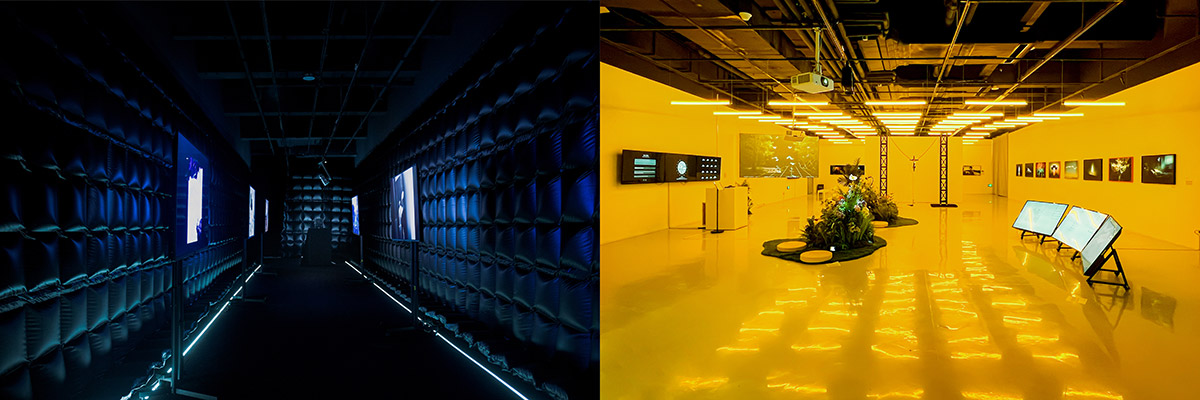
Wang Yini, Babel Bottle: Pragmatics, Creation, and Forms of Life in the Age of Artificial Intelligence, Support by 2025 Emerging Curators Project,
Central Art Museum, Hangzhou, China. Photograph by Xu Jian © Wang Yini & Central Art Museum.
Although the theme centered on Gen AI, I emphasized visitors’ embodied experience. They had to traverse a narrow, dark space enclosed by inflatable structures, symbolizing the bottleneck of the Klein bottle, and then enter a yellow - lit area that reset perception. This design aimed to break the daily experience and stimulate exploration. The works on display were created between 2022 and 2025. Adjacent pieces shared semantic themes but highlighted differences across tools and contexts. For example, works generated by Stable Diffusion and Midjourney explored model-specific mechanisms under “memory rewriting.” Other works, based on Stable Diffusion, contrasted “closed-system” versus “open-system” approaches to artistic generation.
In this exhibition, I invited several art system works incorporating elements of artificial intelligence, to discuss the interplay of systems and achieve an isomorphic mapping of art systems within the context of Generative AI. For example, the exhibition juxtaposed two works: Wu Zi-Wei’s Mimicry series and Fu Dongting’s Reverse Evolution. They both address “evolution” within digital systems. The former employs a cybernetic system that does not interact with the outside world. It operates in a closed digital space that does not involve the viewer. The work enables viewers to step out of the black box and re-examine the connection between the Chinese character's shape and its meaning in the mind. At the same time, the artist Fu construct an imaginary environment in which human subjectivity is lost, exploring the development of hieroglyphic Chinese characters in a non-human or human-free world. Here, the art system functions purely as an object of observation. In contrast, Wu’s series represents an open system of Artificial Life, emphasizing a dynamic artistic mechanism that is responsive to and interacts with the physical environment.
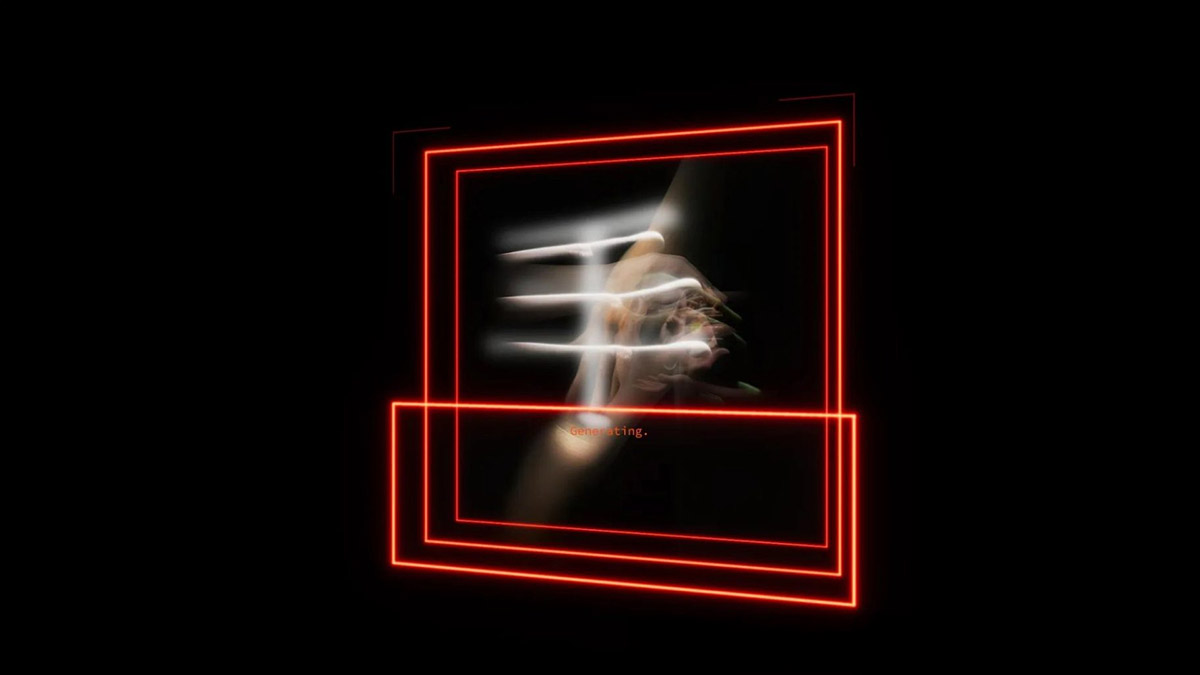
Fu Dongting, Reverse Evolution, 2023, AI-generated video, screenshot. © Fu Dongting
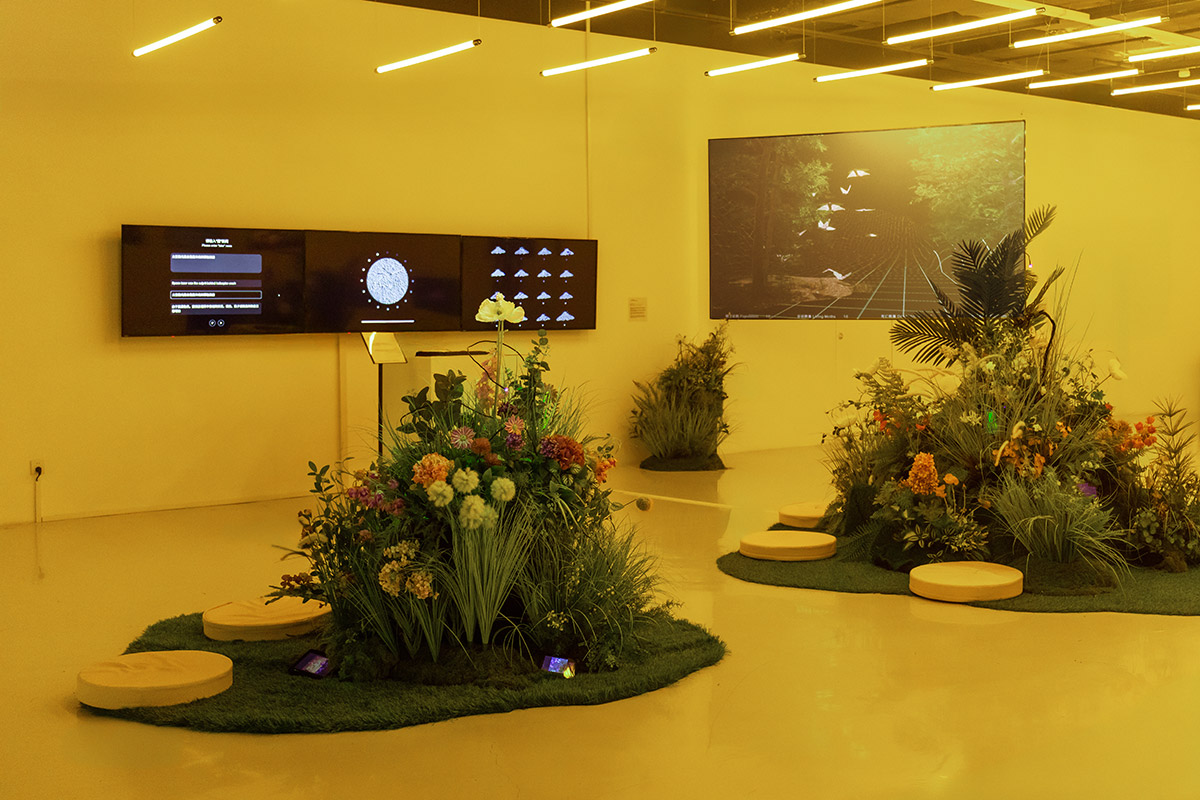
Mimicry, Mimicry: Mimetic on Simulacra, and Mimicry: News Ecosystem, 2025, exhibited in Babel Bottle. Photograph by Xu Jian. © Wang Yini, Wu Ziwei & Central Art Museum
When everyone shares a tangible database of collective intelligence and aesthetics[4], what kind of artistic creation still retains a space for spectatorship?Admittedly, within the development of contemporary art, the concept of artist identity based on creativity—and the resulting mechanisms of 'star-making'—remains the infrastructure of the art ecology. On the other hand, the 'presence' of the viewer and 'participatory' approaches have already been subjects of profound discussion. Both paradigms are grounded in an upholding of liberal humanist subjectivity.The practice of generative AI is reminding curators, artists, and audiences that the agency and fluidity of creativity point toward a disenchantment with the 'cult of the artist.' Furthermore, the practice of generative AI prompts a questioning of the human role within the system regarding liberal humanist subjectivity; the panic surrounding the 'subject of creativity' seems to stem from this very issue.Our lives are approaching a posthuman state of 'dry-wet' co-constitution. As N. Katherine Hayles advocates in How We Became Posthuman regarding a positive, embodied form of posthumanism: when humans become components of a distributed system[5], the full expression of human capability is seen precisely as depending on the articulation with the system, rather than being threatened by it. Reflexive epistemology replaces objectivism; distributed cognition replaces autonomous will; embodiment replaces a body seen as a support system for the mind; and a dynamic partnership between humans and intelligent machines replaces the liberal humanist subject's manifest destiny to dominate and control nature[6].In the following text, I invite participating artist Wu Zi-Wei for a dialogue. She is an artist and scholar specializing in artificial life and art systems. Taking Wu Zi-Wei’s practice as a guiding thread, this dialogue will discuss creativity and art systems in the age of generative AI, focusing on her Mimicry series and her participation in this exhibition."
Wang Yini: In the Mimicry series, how do you understand the concept of a "system" in Artificial Life, and how do you incorporate it into an artistic language directed towards the audience?
Wu Zi-Wei: Inspired by Stroud Cornock and Ernest Edmonds’ work on computer-augmented artistic paradigms, I extended my research into software-driven Artificial Life art. These creative systems can be categorized into three paradigms: static systems, which maintain a basic viewing relationship between the work and the audience; dynamic passive systems, which introduce time and environmental factors to allow continuous evolution of the work; and dynamic interactive systems, which further incorporate participant feedback and sometimes include mechanisms to enhance diversity.
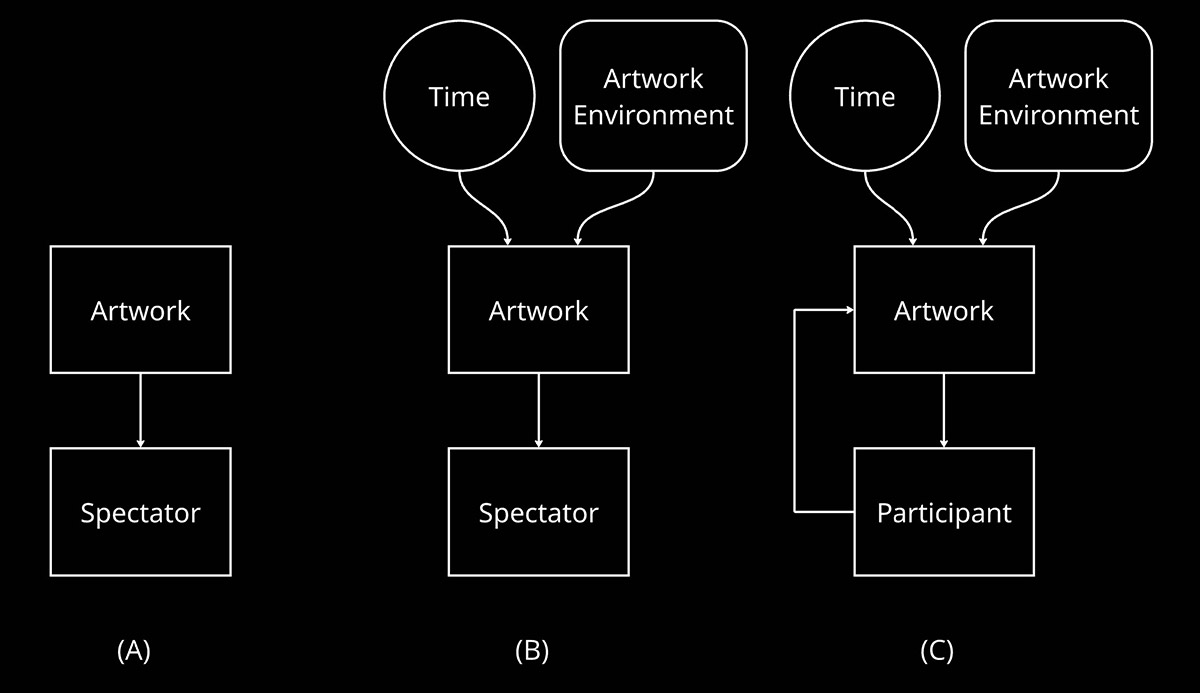
A: the static system; B: the dynamic passive system; C: the dynamic-interactive, 2025, system by Cornock and Edmonds, redrawn by Wu Ziwei. © Wu Ziwei
My work Mimicry uses a dynamic passive system to construct an Artificial Life environment. Its inspiration comes from mimicry in the animal kingdom - organisms adapt to survive by changing their patterns or even their shapes. I draw a parallel between this and the human social environment. As Lippmann noted in Public Opinion[7], people live in the real world but often perceive it through pseudo-environments like news and social networks. Their behaviors, in turn, reshape the real environment, creating a continuous feedback loop.
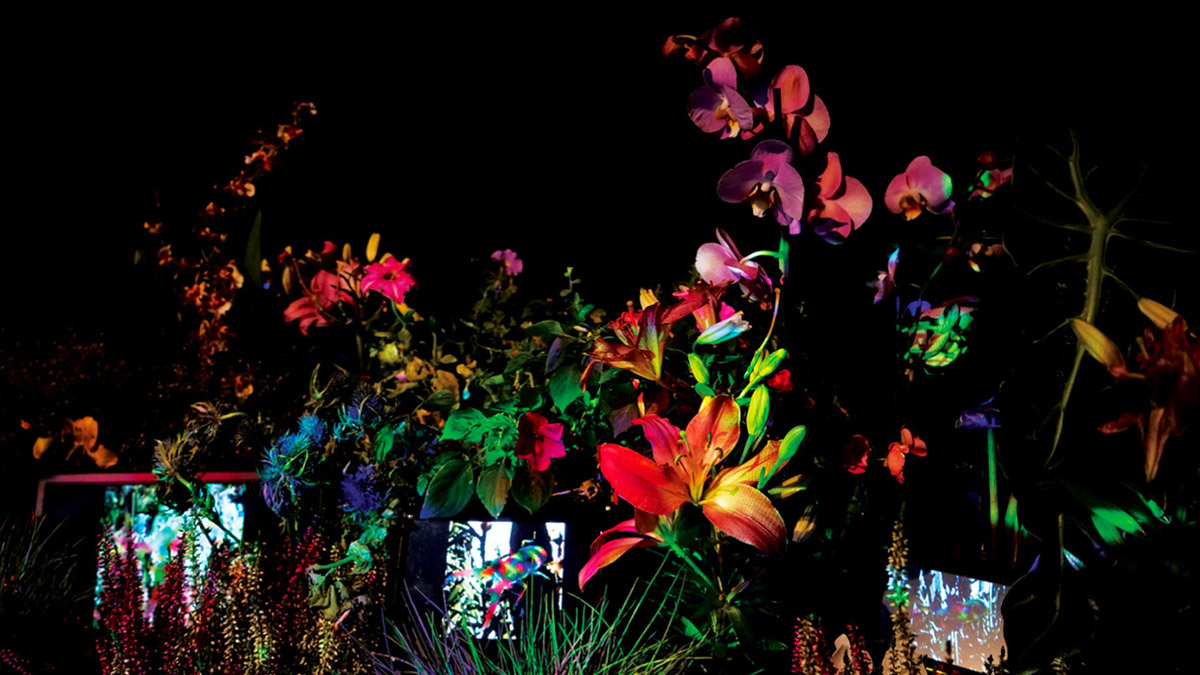
Wu Ziwei, Mimicry, 2020-2021, flower, camera, screen, Raspberry Pi, projector, Genetic algorithm. © Wu Ziwei
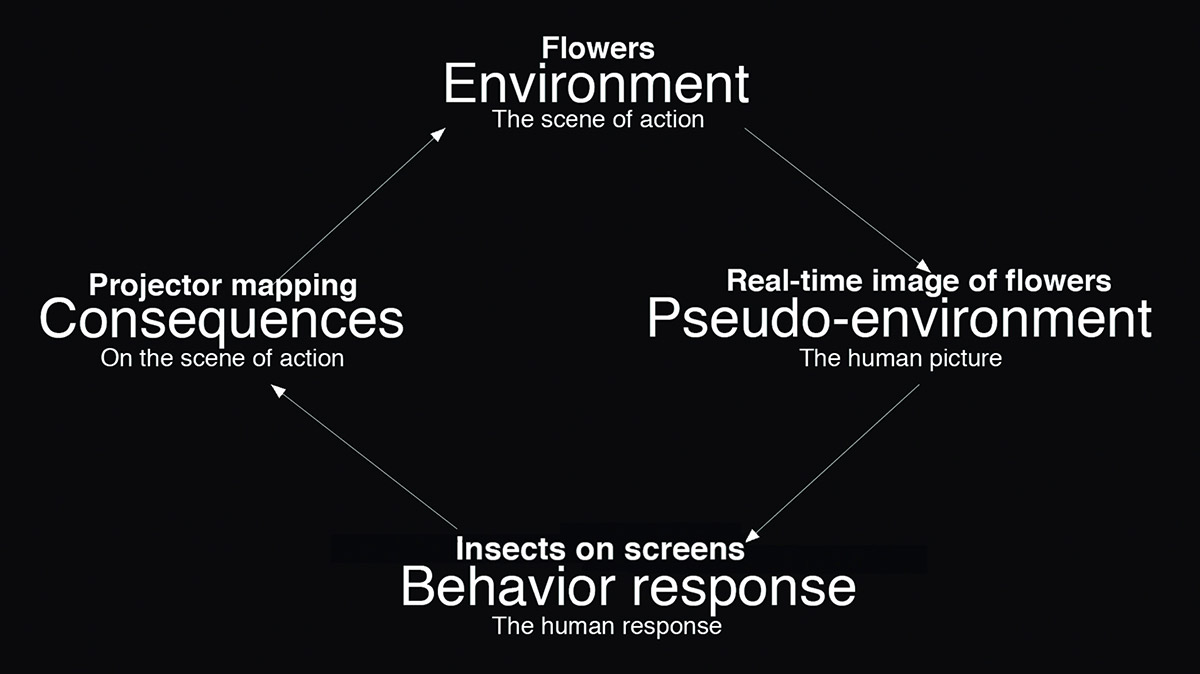
《公众舆论》中的伪环境及其在拟态中的对应关系。©吴子薇 [8]
In Mimicry, the four main elements - the flowers, the live video feed of the flowers captured by a camera, the virtual insects, and the projection mapping - correspond respectively to the four components in Walter Lippmann’s theory: the environment, the pseudo-environment, behavioral response, and consequence. Together, they form a closed-loop system, illustrating the parallel relationship between Mimicry and public opinion.
Specifically, the system captures real-time images of plants through a camera and employs a genetic algorithm to analyze their colors and textures. Based on this data, it continuously evolves a group of virtual insects designed to mimic the flowers visually. The simulated processes of reproduction, selection, and mutation are displayed on the screen in real time. Finally, the generated insect images are projected back onto the physical plants, completing the feedback loop between the virtual and the real.[9]
Wang Yini: You draw a parallel between mimicry in animals and the pseudo-environment in communication theory. What inspired this comparison?
Wu Zi-Wei: The field of Artificial Life explores both life-as-we-know-it and life-as-it-might-be. It involves studying existing life structures(whether found in nature or artificial systems) ,and using that knowledge, simulates new forms of life through artificial systems, thus creating possibilities for life-as-it-might-be.
The term “pseudo-environment” comes from communication studies. It refers to a reconstructed environment created by mass media through the selection, processing, and structuring of information - an environment that is not objective reality. Interestingly, in Chinese, this term shares the same translation as “mimicry” in biology, and conceptually, the two are almost structurally isomorphic; both describe adaptive systems that construct mediated realities in order to interact with their surroundings.
In the follow-up works to the Mimicry series - Mimicry:Mimetic on Simulacra and Mimicry: News Ecosystem - I extend the Artificial Life system into today’s social media environment. The sphere of public opinion has transformed as it is now co-created by the masses online, with numerous AI technologies participating in the production and dissemination of discourse.
We have entered a post-truth age, where facts give way to appearances and confirmation bias - a trend amplified by the rise of social media. As Jean Baudrillard observed, “The simulacrum is never that which conceals the truth - it is the truth which conceals that there is none.”
Like the peppered moths, we live in an ever-changing artificial environment. During the Industrial Revolution, the moths’ colors shifted with the darkening and whitening of trees under coal smoke and pollution control. Similarly, our behaviors and perceptions now adapt to the continuously reconstructed digital ecology surrounding us.
Wang Yini: How do you design the life forms within these dynamic life systems? What kind of role do the viewers play in these systems?
Wu Zi-Wei: In Mimicry:Mimetic on Simulacra, the audience participates in constructing the artificial environment through text input. The system then generates a corresponding visual landscape and evolves a group of digital moths. This process inspired the work’s title - the moths perform acts of mimesis upon ever-shifting artificial simulacra. Viewers can scan a QR code to retrieve the moths they helped generate and often share them online. Building upon the three paradigms of Artificial Life systems mentioned earlier, this work further explores a new model of ecological dynamic interaction, completing a full cycle from artwork to “pseudo-environment”.

Wu Ziwei, Mimicry: Mimetic on Simulacra, 2025, Algorithm-driven multi-screen interactive installation. © Wu Ziwei, Tian Xiyu, and Su Wanchao.
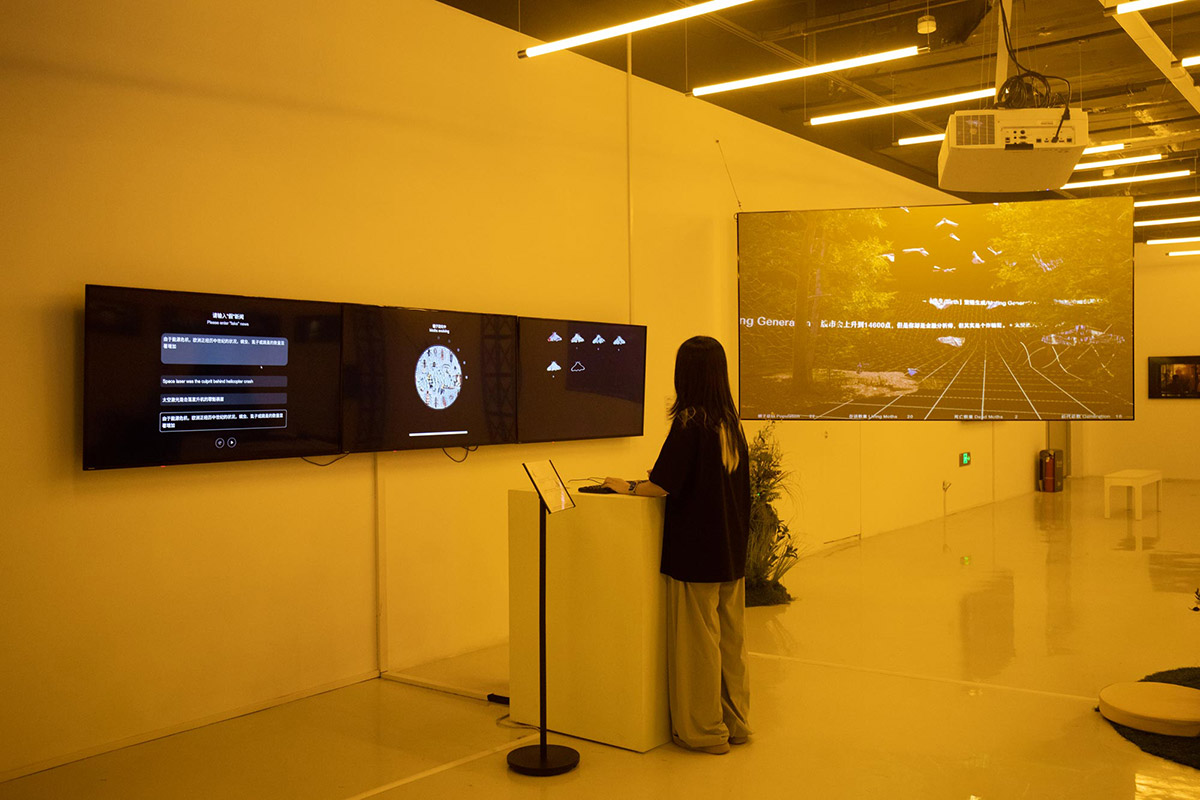
Wu Ziwei, Mimicry: Mimetic on Simulacra and Mimicry: News Ecosystem with audience interaction in the exhibition Babel Bottle, 2025. Photograph by Wang Yini © Wang Yini, Wu Ziwei & Central Art Museum
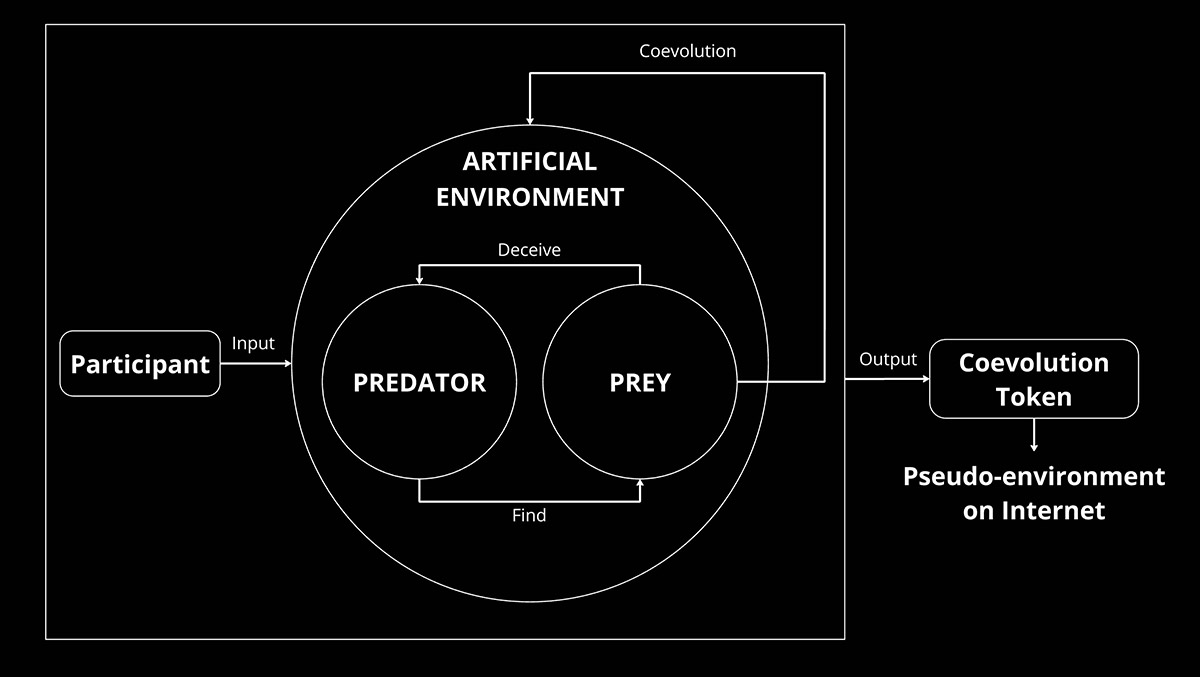
Wu Ziwei, Illustration of Mimicry: Mimetic on Simulacra system design. © Wu Ziwei
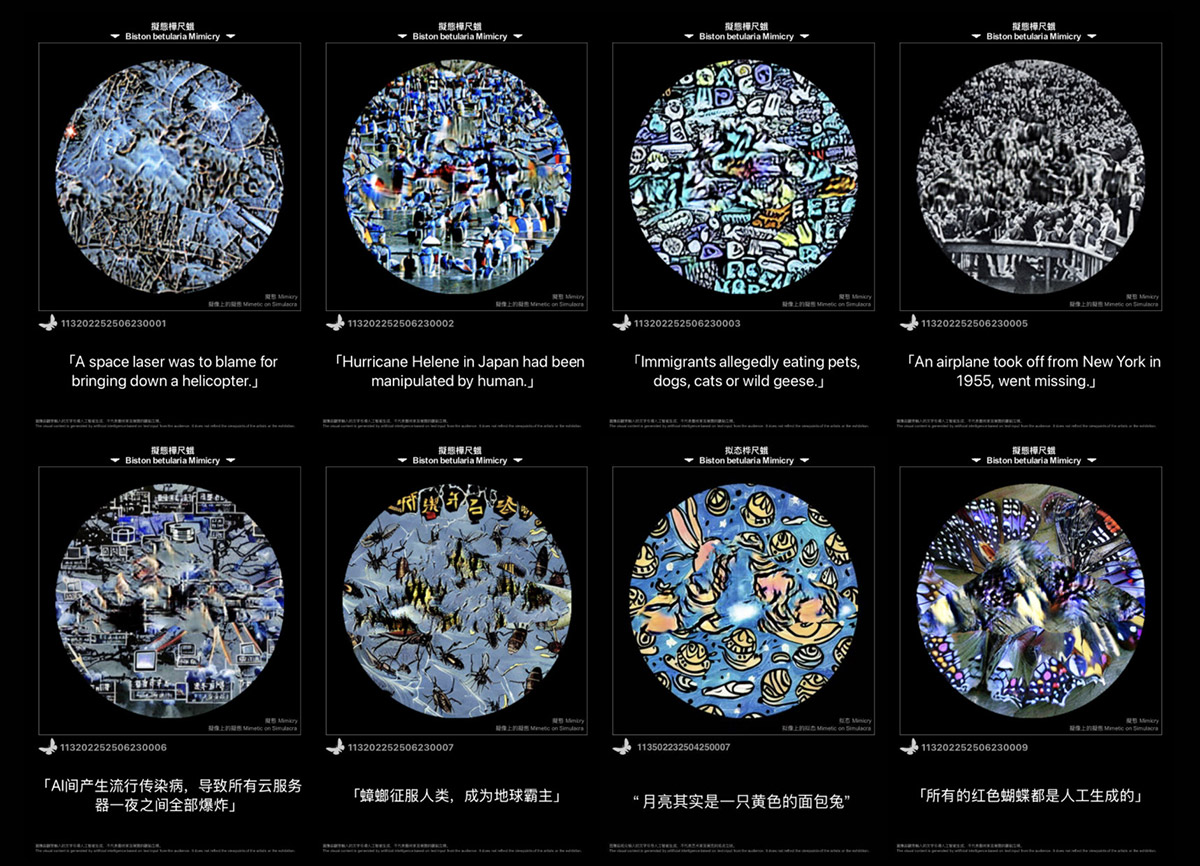
Collection of coevolution tokens for sharing online, generated by Mimicry: Mimetic on Simulacra, 2025 © Wu Ziwei.
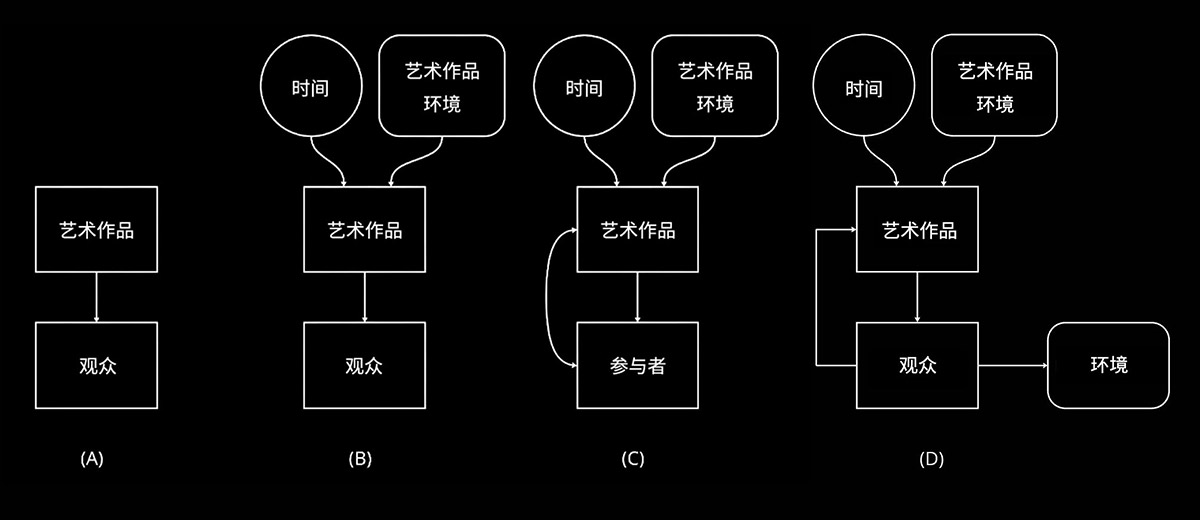
A: the static system; B: the dynamic passive system; C: the dynamic-interactive system; D: the ecological dynamic-interactive system, 2025 © Wu Ziwei
These evolved moths also migrate into another dynamic system, Mimicry: News Ecosystem. Here, I simulate the life cycle of the peppered moth—after hatching, it neither eats nor drinks, mates briefly, and then dies.
The virtual moths are driven by Boids and genetic algorithms, engaging in mating, competition, and extinction. Their evolution mirrors the life cycle of news: how it enters public awareness, mutates through transmission, and ultimately fades into oblivion.
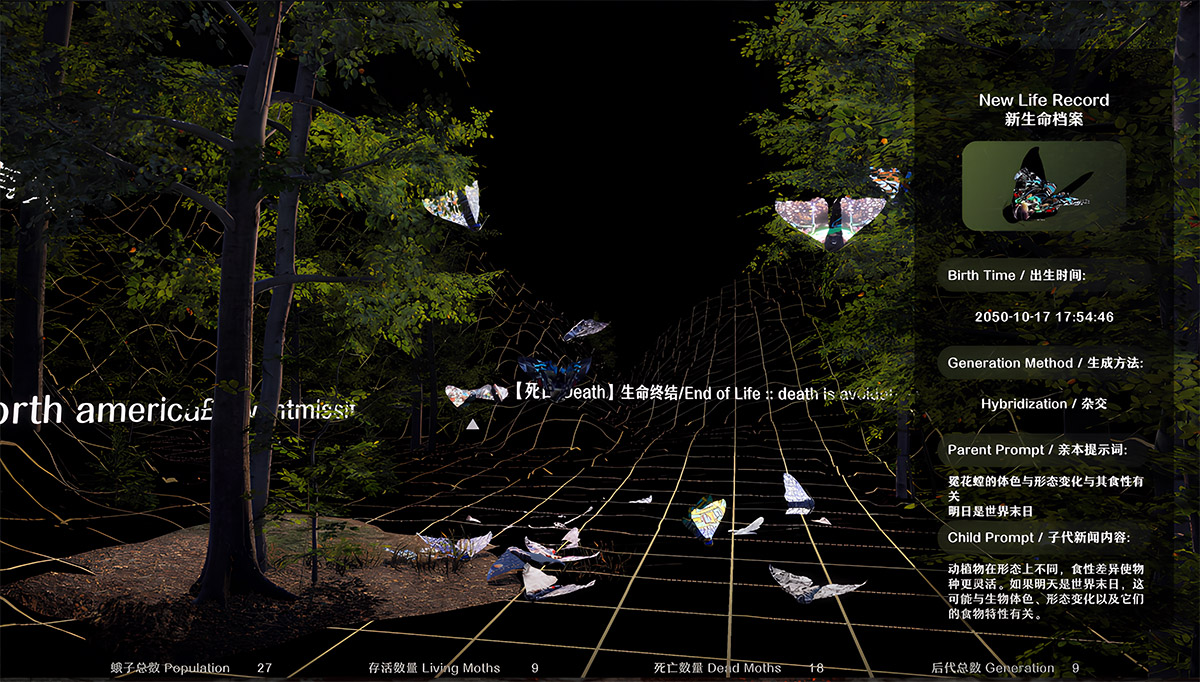
Wu Ziwei, Mimicry: News Ecosystem, 2025: The hybrid-generated outputs of fake news with LLM, Real-time interactive virtual ecosystem © Wu Ziwei, Yu Hankun, Lu Yiyang, Su Wanchao
Wang Yini: Your work presents itself as a human–machine art system, involving Artificial Life, AI algorithms, and human participants who bring their own experiences and data. Compared with conventional digital art, what are the main differences in how an art system is created and exhibited?
Wu Zi-Wei: During the project’s early research phase, I approached the work with academic rigor, studying ecology and communication theory in search of a solid conceptual framework. Yet, my mindset shifted once I entered the creative stage of system building. I was motivated by pure curiosity instead of theoretical precision - how might the moths “hybridize”? What new mutations might emerge from combining patterns with text? When the system was finally running, the complex results that evolved through audience interaction far exceeded my expectations, deeply satisfying that curiosity. Looking back, I realize I was never a “creator” controlling everything, but rather an observer - someone who connects the circuits, then watches with anticipation as life grows on its own.
Wang Yini: This was also the effect I hoped to achieve when curating this exhibition. After several iterations of implementation, what insights have you gained about the agency mechanisms of audience interaction within the art system?
Wu Zi-Wei: During the interactions, we found that once viewers understood the rules and saw the prompt “Please enter fake news,” some simply copied the preset examples to observe the system’s reactions. However, most chose to create bizarre stories - ranging from cross-species sci-fi and celebrity fabrications to self-mythologizing narratives. They clearly enjoyed leaving traces of their own creativity in the system and proudly shared their results with others.
Interestingly, when I was testing the system, I found it surprisingly difficult to write such “news.” In contrast, the audience in the exhibition showed astonishing creativity - their ability to invent was genuinely inspiring.
This behavior confirms my earlier study based on Baudrillard’s theory; in the post-truth era, what people desire is not truth but spectacle.[i] It is precisely this pursuit of spectacle that drives the audience’s engagement in the system. As Baudrillard reminds us, the public is the most powerful medium of all - mass(age) is message.
Wang Yini: Specifically, what kinds of interaction patterns do the audience exhibit?
Wu Zi-Wei: Based on the audience’s interaction behaviors and underlying motivations, they can be roughly divided into three categories:
1. Fake-news joke makers: They input widely circulated meme-like fake news (e.g., stories involving Trump or Musk) to exaggerate the system’s absurdity and anticipate a knowing laugh from subsequent viewers.
2. Participation-focused wishers: They treat the system as a wishing pool, entering real-life content related to themselves or friends and family, hoping to “wish” for things like gaining muscle or sudden wealth.
3. System disruptors: They attempt to test and challenge the system’s stability and boundaries by inputting spoofed or disruptive texts.
An interesting example is a visitor who, in order to increase their moth’s “mating” chances, entered dozens of similar self-written news items in a short time and eventually succeeded. He remarked, “Flooding the internet really works.” Once viewers realize they can influence the system, it triggers behavior akin to instinctive biological drives.
Wang Yini: Yes. In the work, Gen AI’s fabrication capacity and unpredictability create a “spectacle-driven” effect. The underlying logic might be that, in the age of Gen AI, the extreme proliferation of social media and the widespread use of AI have significantly raised humans’ threshold for spectacle. In contemporary communication systems, human-generated information and AI-generated misinformation reproduce each other reflexively, intensifying the desire for spectacular stimuli beyond pre-AI times.
So, could this craving for human-machine spectacles actually reflect a desire for alternative forms of creativity? How do you see the role of Gen AI in your art system?
Wu Zi-Wei: My attitude toward Generative AI (Gen AI) is to treat it as a system component for constructing the context of the artwork, rather than as a creative agent. In my work, AI is not a generator of style, but a part and accelerator that drives the system. I focus on how to integrate AI into a larger interactive framework so that it serves the core artistic concept.
Compared with my earlier work Mimicry, in creating its follow-ups - Mimicry:Mimetic on Simulacra and Mimicry: News Ecosystem - we have already entered the era of Generative AI. From the creator’s perspective, collaborating with Gen AI greatly reduces the burden of creation and frees me from mechanical labor. In the exhibition, I observed that Gen AI significantly stimulates audience creativity; through very simple interactions, they can co-create a diverse range of visual spectacles with the AI. Regarding the generated content, I believe Gen AI demonstrates a unique form of “machine creativity.” It relies on massive datasets and algorithms that understand complex semantics, giving rise to collective agency that then feeds back into the system.
Currently, our system has collected thousands of exhibition data points. I am very much looking forward to future research to deeply analyze the unique patterns shown by audiences and Gen AI in the co-creation process.
Wang Yini: "Collaboration" means allowing the creativity of various human and non-human agents within the art system to flow in a certain way. Whether the relationship between these agents is "synergistic" or "instrumental" perhaps only concerns the artist's self-narrative, whereas, at the perceptual level of the artwork, the dynamic changes generated by the system are superior to romantic notions of "artist creativity." Perhaps in the Gen AI era, the establishment, design, and examination of the art system can lead to a more dynamic exhibition state.
Wang Yini is an artist, curator, writer and designer currently living and working in Hangzhou, Zhejiang. She graduated in 2019 with a Master's degree from the China Academy of Art's Visual China Innovation Center. Wang Yini practices in the fields of 3D visualization, mixed reality, curating, and creative writing. Her research interests include visual culture and meta-research of computer-generated imagery, AI art, Chinese science fiction, mixed reality narratives, and Chinese internet pop culture. She employs an actor-network theory-based approach to de-centering the human perspective. In a complex and diverse human-machine-media reality, she constructs intricate and engaging multi-threaded narratives. Wang Yini's works have been exhibited at institutions including the China Academy of Art Museum, San Francisco Art Institute, Hong Kong Shenzhen Bi-city Biennale of Urbanism\Architecture, UFO Terminal, Beijing Times Museum, Hive Center for Contemporary Art, Nanjing Arts University Art Museum, and Powerlong Art Center (Hangzhou). She is the winner of the 2025 Emerging Curators Project of Central Art Museum and has also won the Best Creative Script Award at the 2024 Filmarathon.
Wu Ziwei is a media artist and researcher born in Shenzhen, China. She had an outstanding graduate bachelor's degree from the China Academy of Art, School of Intermedia Art (SIMA), and a Master of Fine Art with distinction in Goldsmiths, the University of London in Computational Arts. She had a Ph.D. degree in the Academy of Interdisciplinary Studies, majoring in Computational Media and Arts (CMA) at the Hong Kong University of Science and Technology. Her artworks and research primarily focus on biology, science, and their impact on society, utilizing various media. She engages in the interdisciplinary studies of Artificial Life Art, exploring the intersection of art and research with biology as concepts, bio information as data, and biomaterial as the medium. She is a Lumen prize, Batsford prize winner, and a Longlist in Information is Beautiful Award. Her research was
published in the SIGGRAPH Art Program, ISEA, and Artificial Life Journal in MIT Press. She has exhibited at international venues, including Ars Electronica in Linz, CYFEST in Saint Petersburg, ACMI in Australia, Watermans Gallery and Cello Factory in London, Run Run Shaw Creative Media Centre in Hong Kong, among others.
Notes
[1] Law, John. "After ANT: Complexity, Naming and Topology" The Sociological Review, vol. 47, no. 1, 1999, pp. 1–14.
[2] Luciano Floridi, "AI as Agency without Intelligence: On Artificial Intelligence as a New Form of Artificial Agency and the Multiple Realisability of Agency Thesis" Philosophy & Technology (2025) 38:30
[3] Giorgio Franceschelli. Mirco Musolesi, "On the Creativity of Large Language Models", AI & SOCIETY (2025) 40:3785–3795
[4] In this text, this refers to various large AI models.
[5] "Distributed Cognition" posits that cognitive activity is distributed across individuals, artifacts, the environment, and socio-cultural systems, constituting a dynamic unit of analysis that encompasses the interaction between internal and external representations, Proposed by Edwin Hutchins.
[6] N. Katherine Hayles. 1999. "How We Became Posthuman: Virtual Bodies in Cybernetics, Literature, and Informatics ". The University of Chicago Press.
[7] Walter Lippmann. 1946. "Public Opinion". Transaction Publishers.
[8] Walter Lippmann. 1946. "Public Opinion". Transaction Publishers.
[9] Wu Zi-Wei, and Lingdong Huang. "Mimicry: Genetic-algorithm-based Real-time System of Virtual Insects in a Living Environment-A New and Altered Nature" Proceedings of the ACM on Computer Graphics and Interactive Techniques 4.2 (2021): 1-8. https://doi.org/10.1145/3465615
[10] Simone D’ Alessandro. 2023. "From the Pseudo-environment to the Meta-verse. Recontextualising Lip-pmann’s thought" Cambio: rivista sulle trasformazioni sociali: 25, 1, 2023 (2023), 265–275.