
- Download Issue 65 (US Letter, 7,8 mb) Buy as Book on Demand here (US) and here (DE)

by Senka Ibrišimbegović
if walls could tell: A Participatory Stage for Urban Expression
In the heart of Sarajevo, if walls could tell by Mischa Kuball, emerges as a powerful medium for collective storytelling. Situated at the future site of the Ars Aevi Museum of Contemporary Art, this participatory project transforms three white walls into a stage for citizen expression. More than a temporary installation, it serves as a conceptual bridge between art, public space, and collective memory.
Traditional museum walls protect and present art, separating the observer from the object. if walls could tell subverts this by inviting direct interaction. Citizens leave traces of their thoughts, emotions, and ideas, transforming static surfaces into living entities. Markers, spray paint, and brushes become tools of urban storytelling, capturing Sarajevo’s dynamic identity. The participatory nature embodies democratic ideals in public spaces, turning passive observers into active contributors. By incorporating citizens’ contributions into its collection, Ars Aevi affirms its commitment to inclusivity and grassroots creativity. The installation bridges institutional and public art, fostering shared ownership over artistic expression.
Located between the Historical Museum and the National Museum of Bosnia and Herzegovina, the installation fosters a dialogue between history and contemporary expression. The site is also adjacent to the proposed First Transverse, an infrastructure project that threatens the area’s cultural coherence. By reclaiming this contested space, if walls could tell asserts the value of public spaces as arenas for cultural engagement, promoting their preservation for future generations.
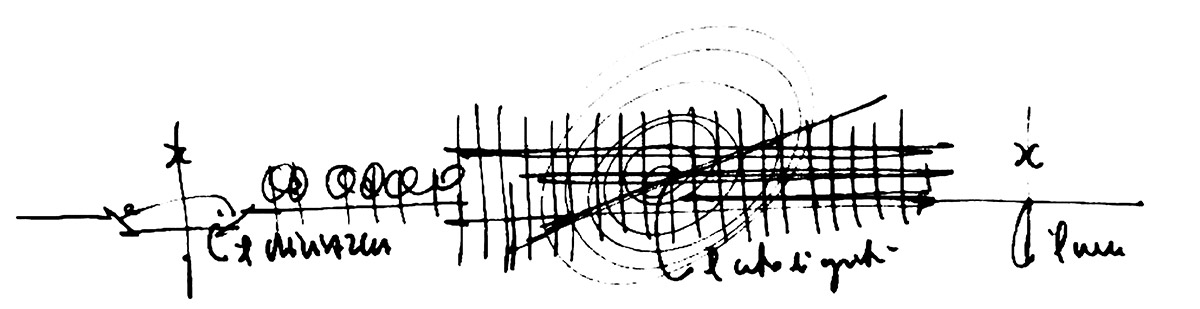
Sketch by Renzo Piano, 1999/2000
While the walls are temporary, their impact is lasting. Traces left by citizens will be preserved within Ars Aevi’s collection, ensuring today’s voices remain for future audiences. The interplay between temporary and permanent dynamics underscores the transformative potential of ephemeral urban interventions in shaping long-term cultural narratives.
The installation aligns with the vision of a Museums Quarter — a cohesive cultural hub between the Historical Museum and the National Museum. Through temporary interventions and permanent events, the site already activates public space, advocating for cultural and social values over infrastructural projects. Projects like if walls could tell demonstrate how art fosters community and shared purpose, envisioning a future where public spaces enrich rather than merely serve transient needs.
Sarajevo’s identity is intertwined with resilience and renewal. The scars of war and reconstruction shape the city’s landscape. if walls could tell reflects the power of collective memory, preserving citizen expressions as imprints of urban history. By embedding these narratives into Ars Aevi, the installation ensures that Sarajevo’s evolving identity remains documented, emphasizing inclusivity, creativity, and dialogue.

Ars Aevi Museum, 3D Render by Studio NonStop
if walls could tell is more than an installation; it is a catalyst for change. By inviting citizen engagement, it transforms urban space into a stage for expression and community participation. It challenges traditional notions of art and public space, proving that participatory practices foster cultural preservation and transformation.
As Sarajevo evolves, projects like if walls could tell highlight the need to place culture and creativity at the core of urban development. Temporary interventions shape permanent change, ensuring public spaces are not just functional but meaningful. If walls could truly tell, they would speak of a city alive with ideas, resilience, and collective spirit.
Senka Ibrišimbegović was born in Travnik, Bosnia and Herzegovina. She attended high school in Switzerland and graduated from the Faculty of Architecture of the University of Sarajevo, complementing her studies with international programs at Yildiz Technical University Istanbul, MIT Cambridge (2001), and TU Wien (2003). She completed postgraduate studies in Italy at the University of Siena, with a master thesis entitled “Museum Cultural District – M1 MuseumOne” in 2004. She began her long-term engagement with the Museum of Contemporary Art Ars Aevi Sarajevo the same year, contributing to the Renzo Piano architectural project and participating in several Venice Biennale editions, including the 53rd Art Biennale (2009), the 15th Architecture Biennale (2016), and serving as Commissioner of the Bosnia and Herzegovina Pavilion at the 58th Art Biennale (2019). She works at the Faculty of Architecture since 2008, earned her PhD in 2015 and became Associate Professor in 2024. Her academic work includes numerous scientific papers and the book The Art (of) Museum: Creating Contemporary Spaces of Identity, Ars Aevi Sarajevo. As Director of the Public Institution “City Museums” Sarajevo, she leads the development of the future Ars Aevi Museum. For her contribution to cultural cooperation with Italy, she received the Order of the Star of Italy – Cavaliere.