
- Download Issue 65 (US Letter, 7,8 mb) Buy as Book on Demand here (US) and here (DE)

by Slobodanka Stevceska
Artistic Practices in a Shifting Public Sphere
"Alexander Is Not Dead, Long Live Alexander!" was the title of the performative lecture we delivered in Athens in 2018. It took place during a pivotal moment in our practice, highlighting a transition from our previous models to an approach that, at first glance, may seem radically different. However, this shift happened naturally — as a logical evolution of our work and a response to necessity. It reflects two particular practices that engage with and address the public sphere. In this text, I will provide brief insight into the reasons behind this decision.
Founded in 2001 by Denis Saraginovski and myself, OPA (Obsessive Possessive Aggression) is an artistic duo based in Skopje. From the outset, our work has focused on context-specific practices that respond to rapid social and political changes. These circumstances often required immediate responses, so our works frequently took the form of interventions, subversive actions, and constructed situations. Collaborative processes have also played a crucial role in these activities, as well as in those that followed. Borrowing tools from marketing, mass media, and propaganda methods, our practice evolved into strategies such as tactical media, mockumentaries, over-identification, and subversive affirmation. By adopting methods originally developed in non-artistic domains, we found powerful tools to address reality.
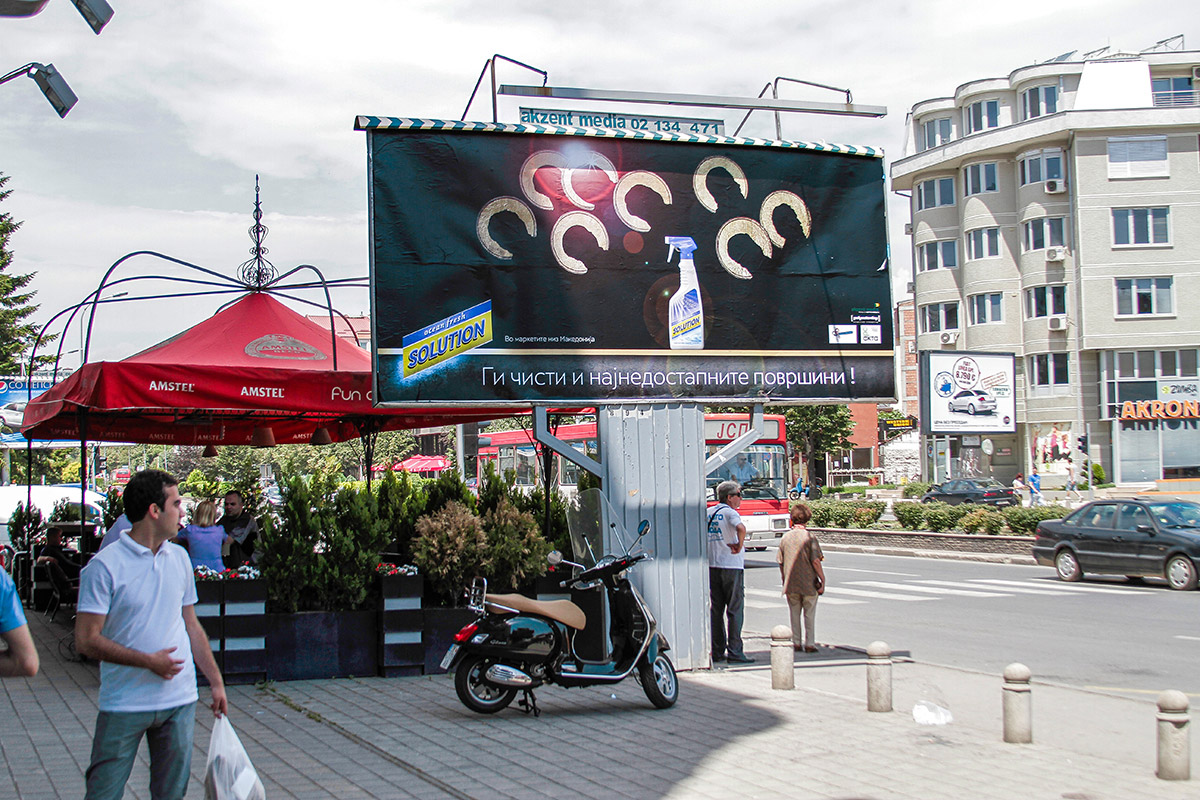
Solution, Obsessive Possessive Aggression (2012, Skopje Kreativa Festival), billboard work adopting the language of advertising to address rising religiosity, generating public debate and subsequent censorship. Photo by OPA.
Later, these subversive strategies proved particularly effective in a nationalist, authoritarian context — a period marked by irrationality and the dominance of ethnocentric narratives in public discourse. Public spaces became battlegrounds claimed through aesthetic tools ranging from media manipulation to the grandiose aestheticization of politics. In such a charged environment, these tactical practices — often perceived as peculiar or unexpected — served as catalysts for public debate and broader dialogue. Primarily realized in public spaces, these interventions gained impact through widespread circulation in mass media and social networks, which were at their peak during that time. Embraced by the community, they evolved into open tools for public engagement.
Inevitably, over time, the models and tools developed and adapted by artists were appropriated by political entities. The public sphere and media became flooded with alternative truths, fabricated narratives, and manipulated images, creating a climate of confusion and disarray. In this environment, the effectiveness of subversive practices began to wane or required rethinking.
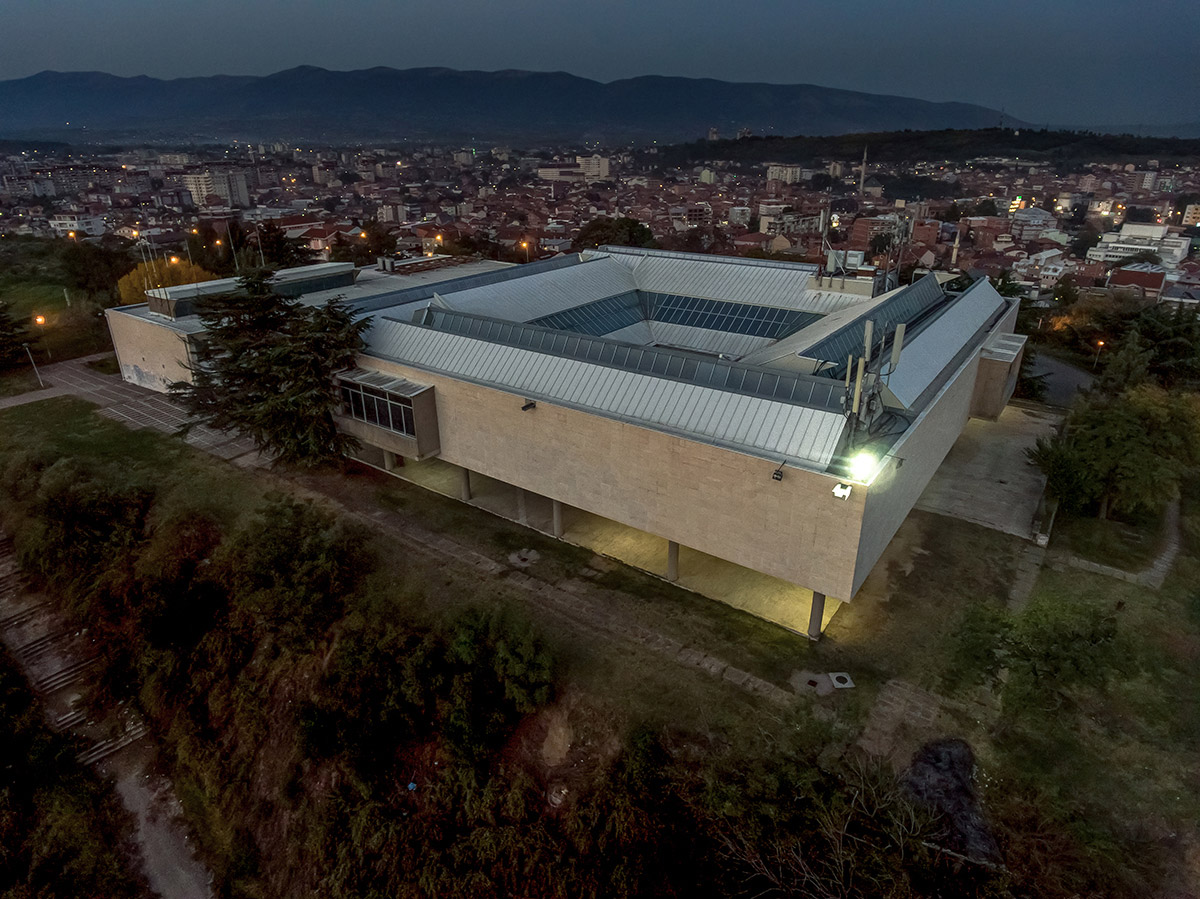
ContraContraBeacon, Obsessive Possessive Aggression (2016, group exhibition Sculptural), object transforming the Museum of Contemporary Art Skopje into a lighthouse transmitting a Morse-code call for critical thought in relation to authoritarian narratives. Photo by OPA.
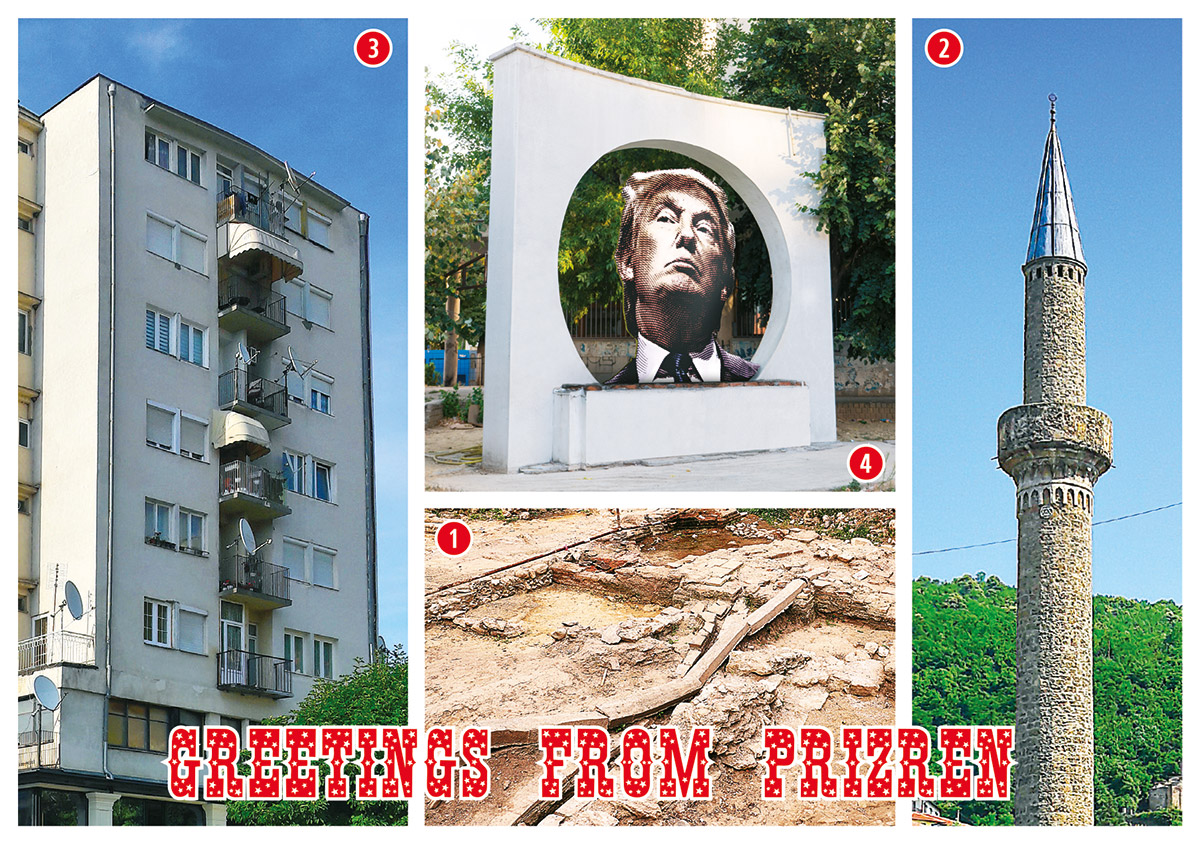

Think Big!, Obsessive Possessive Aggression (2017, Autostrada Biennale), public intervention in Prizren staging a fictional monument to Donald Trump, foregrounding layered histories of power and erasure within a contested urban site. Photo/design by OPA.
Another turning point was the fall of the nationalist government and the rise of a critical mass, which brought renewed hope and enthusiasm. For us, shifting to a different approach became a logical step — a transition toward utilitarian, constructive practices. This new direction focused on contributing to the community while exploring models that would be both applicable and effective within the given social, political, and cultural context. Borderline practices that involve the community — serving either as educational models or tools — became the focus of these activities. These practices aim not only to provide practical and useful outcomes but also to serve as proposals and interventions within the specific socio-political context.
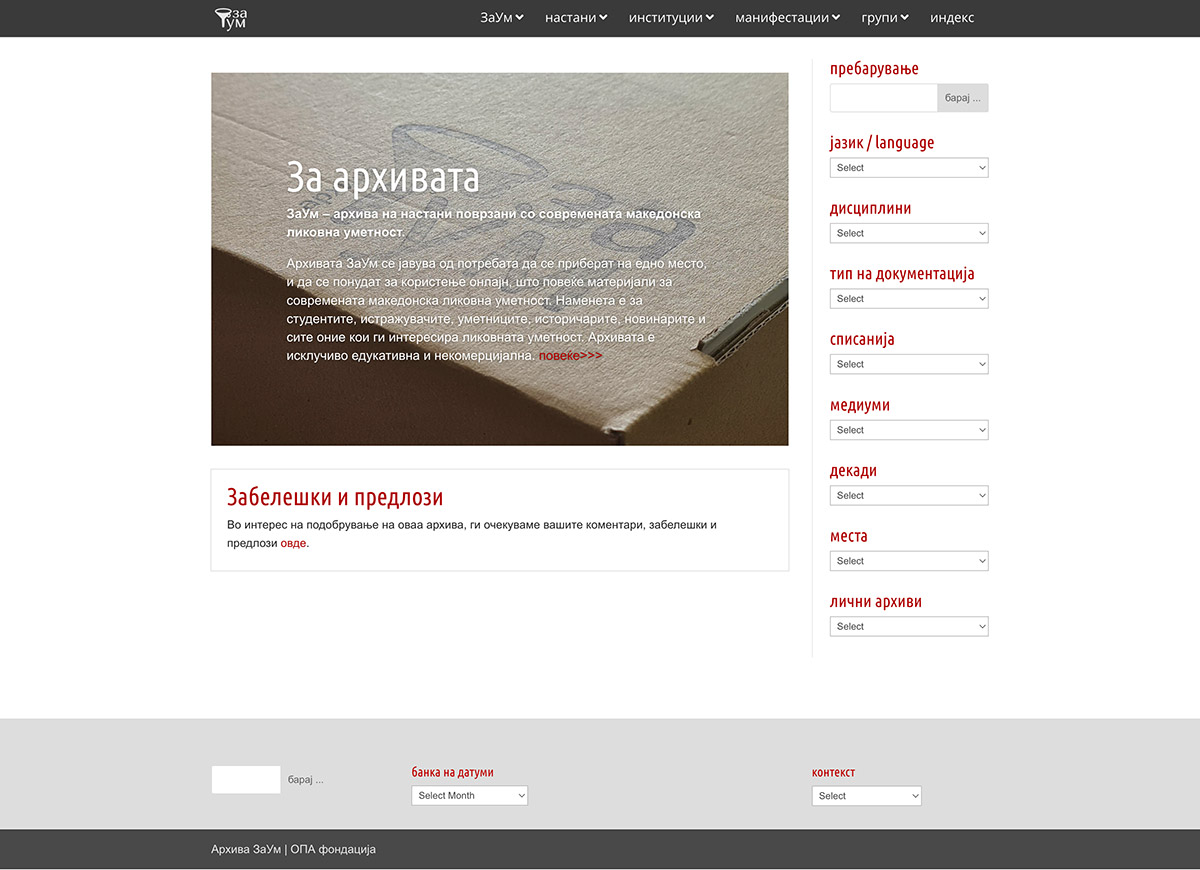
ZaUm Archive, Obsessive Possessive Aggression (2017–ongoing), open-access online platform dedicated to the digitization and preservation of endangered materials related to Macedonian modern and contemporary art, comprising over 7,000 documented events. Layout by OPA.
However, political elites, entrenched in populist frameworks, continue to evade systemic issues. The dominant discourse remains fixated on reinforcing private interests. In this context, advancing and implementing innovative, context-specific artistic practices that address political realities and engage with the public sphere remain critically important.
Slobodanka Stevceska is a visual artist whose practice is context-based, non-collectible, and often ephemeral or disseminated in multiple copies. Since 2001, she has been a member of the art duo OPA (Obsessive Possessive Aggression) [www.o-p-a.org], working with strategies ranging from parody, constructed or altered realities, mockumentaries, tactical media, and subversive affirmation to more utilitarian and constructive artistic approaches in recent years. Stevceska has had solo exhibitions in Macedonia, Croatia, France, Germany, Estonia, the United States, the Netherlands, etc.; has exhibited widely in group exhibitions and festivals such as Transmediale (Berlin), Transeuropa - European Theatre- and Performance Festival (Hildesheim), Freewaves' Biennial of New Media Arts (Los Angeles), Biennale of Contemporary Art (Moscow), Ars Electronica (Linz) and received residency fellowships in France, Germany, Switzerland, Estonia, the Netherlands, etc. She is a co-founder and editor of ZaUm Archive (https://arhiva.zaum.mk), an online platform dedicated to preserving and making accessible materials related to Macedonian modern and contemporary art. Through ZaUm, she explores archival practices as forms of care, collective memory, and cultural responsibility within a post-socialist, semi-peripheral context. Stevceska was also a co-founding member of the Kooperacija Initiative (2012–2015) and the Forms of Ownership collective (2018–2021).